Temporary

Showing posts with label University of Melbourne. Show all posts

10 July 2014

The Gutenberg Bible on Exhibit in Melbourne

Next week sees the launch of the third annual Melbourne Rare Book Week (17 to 27 July). Bibliophiles from across Australasia and beyond will descend upon the city and enjoy an array of talks, demonstrations and exhibitions, ending with the Melbourne Rare Book Fair (25 to 27 July). Visitors to this year’s Rare Book Week will also be able to attend a range of events in the university’s biennial Cultural Treasures Festival (26 and 27 July).

The university will once again host the fair in Wilson Hall, but also add something very special to the 2014 Rare Book Week programme: A 10-day exhibition of the Gutenberg Bible.


The Bible, on loan courtesy of The University of Manchester’s John Rylands Library, will be displayed from 18 to 27 July in the Dulcie Hollyock Room located on the ground floor of the Baillieu Library.

Like all Rare Book Week events, the exhibition is free and open to the public. Viewing hours are 11.00am to 5.00pm daily. Bookings not required.

A series of floor talks connected with the exhibition are also taking place. Details and how to book can be found on the Gutenberg Bible exhibition and Cultural Treasures Festival webpages.

A selection of incunabula and later religious texts from Baillieu Special Collections is also on display on the ground floor of the library in support of the Gutenberg Bible exhibit.

Whether you are local to Melbourne or just visiting, a chance to see a copy of the first substantial book printed in the Western world is not to be missed!

23 May 2014

Provenance in Pictures: Tracking the Ownership of Three Early Printed Books

[First posted on University of Melbourne Library Collections blog]

Last week a group of Melbourne bibliophiles were treated to a delightful talk by preeminent bookman Nicolas Barker, editor of The Book Collector since 1965, and whose bibliography records an impressive 1,000+ entries.[1]

Barker examined twenty or so works from Special Collections and talked to the salient points of each book. This post highlights three of the selected items that had multiple signs of ownership, all of which caught Barker’s eye.

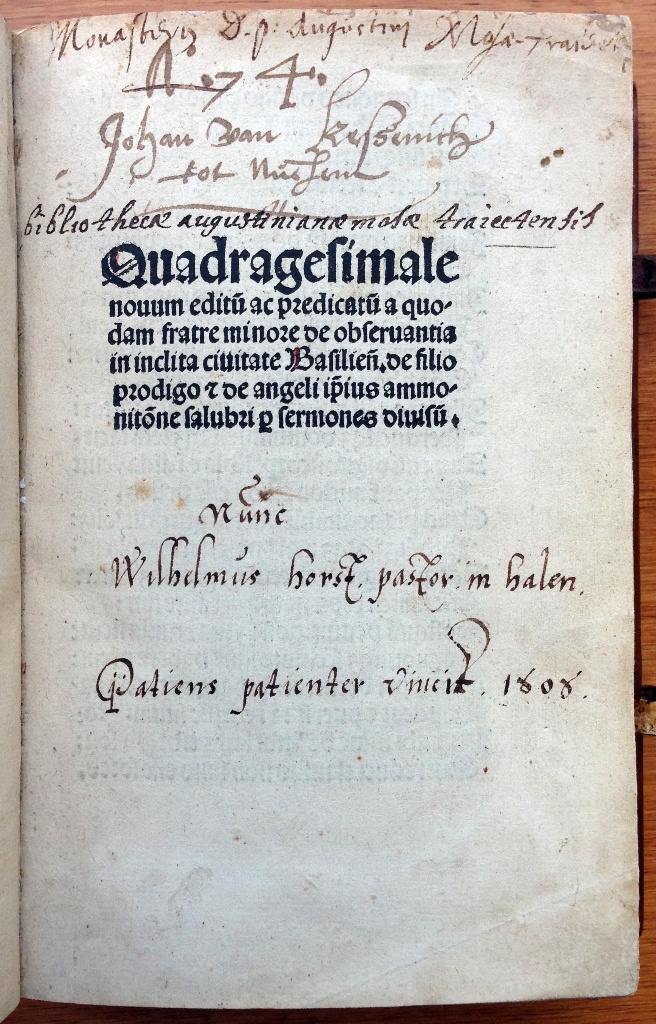
1. Johannes Meder, Quadragesimale de filio prodigo et de angeli ipsius ammonitione salubri per sermones diuisum [Basel: Michael Furter, 1495].

Title-page of the Quadragesimale

Judging by the number of inscriptions on the title-page, this copy of Meder’s Quadragesimale certainly travelled, but not very far. All of them can be localised to the province of Limburg in the Netherlands. The earliest is the inscription by Johan van Kessenich, shown above in between two other inscriptions towards the top of the title-page. Kessenich was born ca. 1522, served as steward of the Augustinian cloister of St Elisabeth in Nunhem, and died ca. 1608. The book then passed to a Wilhelm Horst, whose tidy inscription notes that he was a pastor in the town of Haelen (just 1km south of Nunhem), and came into possession of the Quadragesimale the same year as Kessenich’s approximate date of death. The last two pieces of evidence recorded on the title-page puts the book in the library of the Augustijnenkerk (Church of the Augustinians) in Maastricht, about 55km southwest of Haelen.

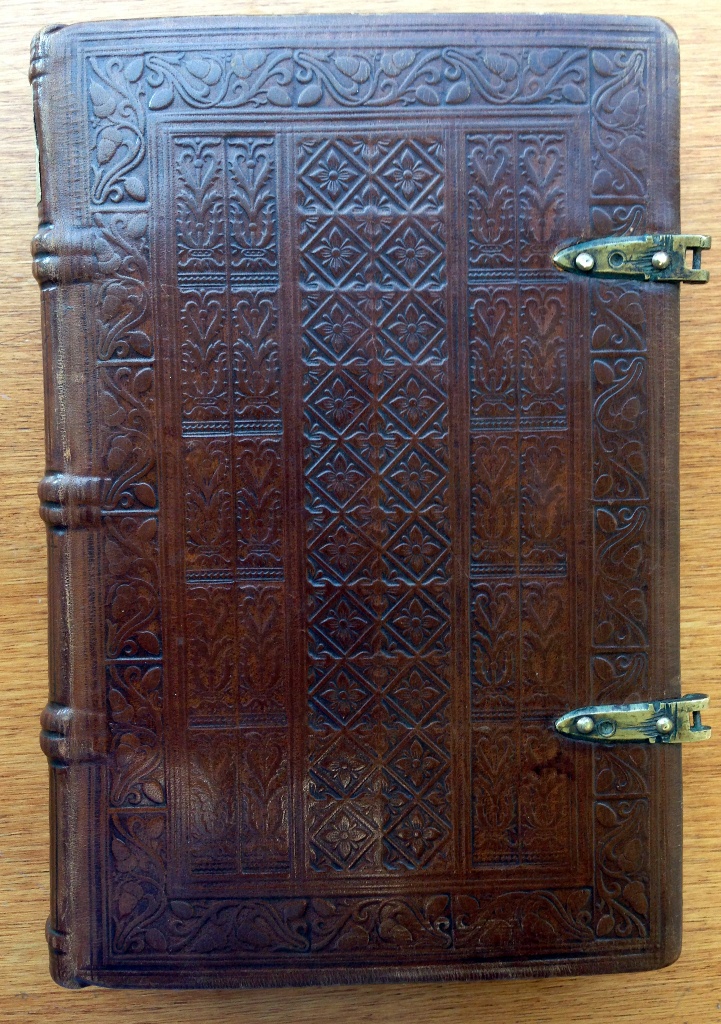
Quadragesimale binding

The book was bound in a contemporary style by the twentieth-century French binder Roger Devauchelle (1915-1993), who preserved the original clasp catches, the paper spine label, and presumably the pastedowns: two fragments from a thirteenth-century Breviary.

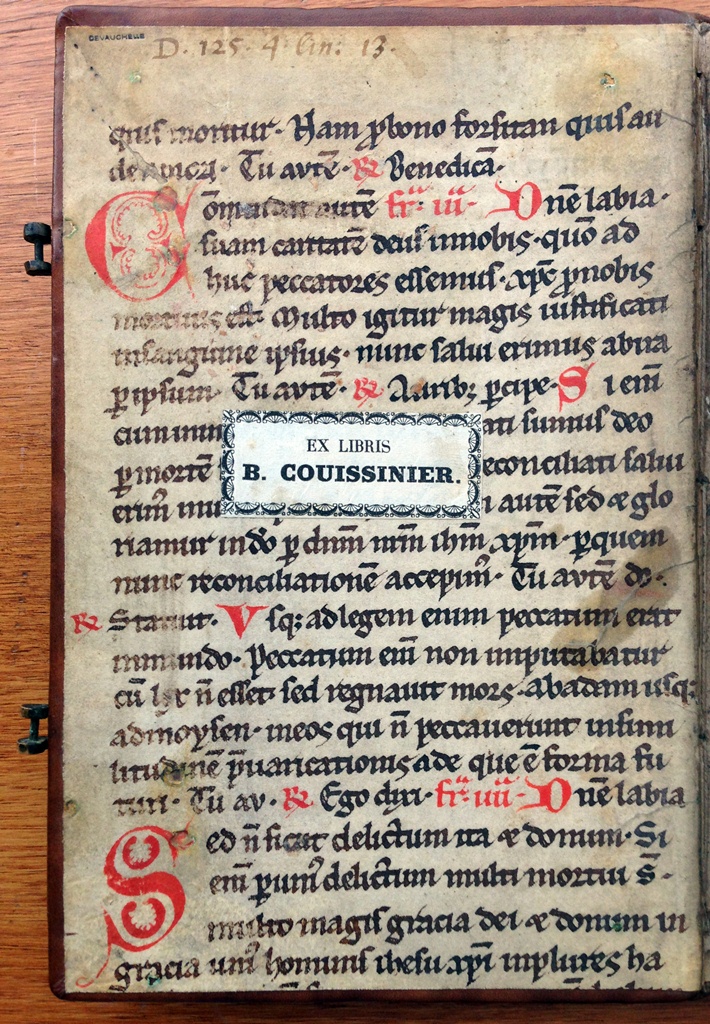
Manuscript pastedown

Affixed to the front pastedown is the book label of ‘B. Couissinier’, and Devauchelle’s stamp can be found in the upper-left corner.[2]

Purchased by the Friends of the Baillieu Library with funds from the George Shaw Trust.

2. Eusebius Pamphilus[Greek title:] Evangelicae praeparatio lib. XV … [with] Evangelicae demonstrationis lib. X. Paris: Robert Estienne, 1544-1545.

Signature of Rudolf Gwalther

The earliest sign of ownership on Estienne’s 1544 edition of Eusebius is an inscription dated just five years after its publication. It reads: ‘Sum Rodolphi Gualtheri Tigurini 1549′. The owner, Rudolf Gwalther (1519-1586), was a Reformed Protestant pastor in Zurich (‘Tigurum’) who married the daughter of Huldrych Zwingli (1484-1531), one of the leaders of the Reformation in Switzerland. He became head of the Zurich church upon the death of Zwingli’s successor Heinrich Bullinger (1504-1575).

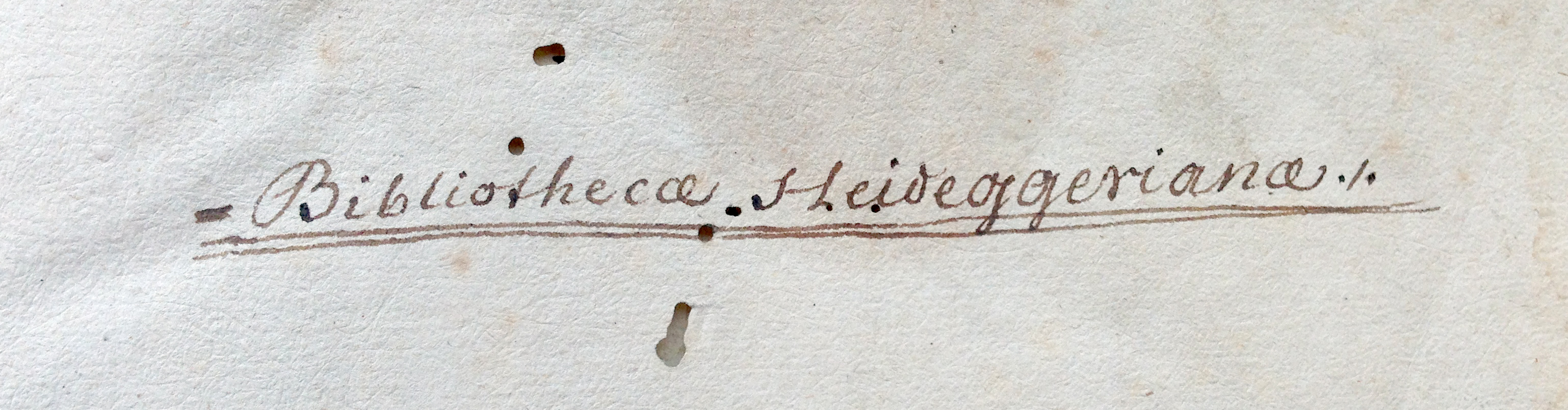
Heidegger collection inscription

The book can next be placed in another Zurich collection, the ‘Bibliothecae Heideggeriana’. This collection was formed by Hans Heinrich Heidegger (1711-1763), whose son, Johann Heinrich (1738-1823), continued to expand the library. A slip pasted on the front free endpaper with the date ’1783′ written upon it suggests the Eusebius was acquired by the younger Heidegger that year. The Heideggeriana collection was sold in 1810 when Johann moved to Geneva.[3]

Stamp of Hachette and Co.

Sometime after the Heidegger sale, the Eusebius made its way to France and into the stock of the great bookshop and publishing house L. Hachette et Compagnie, whose acquisition stamp on the title-page dates to 1918.

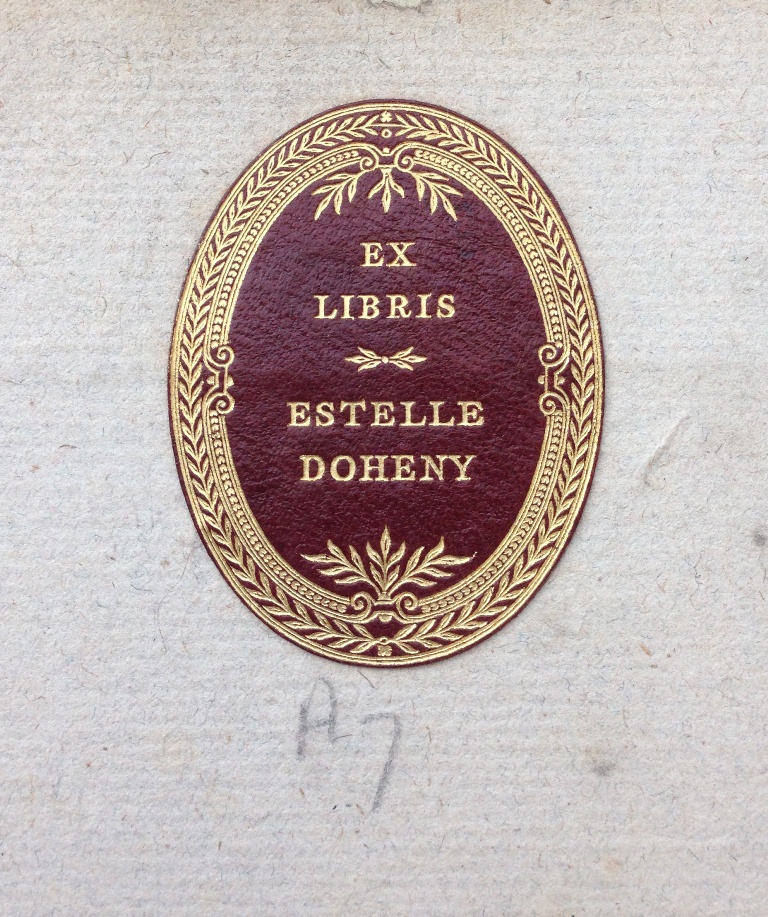
E. Doheny book label

The volume next appeared in the library of Estelle Doheny (1875-1958), who amassed one of the great twentieth-century book collections in America. Doheny left her library, which included a volume of the Gutenberg Bible, to St John’s Seminary in Camarillo, California.[4] In her bequest, Doheny stipulated that the collection must be kept together for 25 years after her death. In 1986, the Archdiocese of Los Angeles and the Seminary Board of Directors made the controversial decision to sell the Doheny collection. The books were auctioned by Christie’s, New York, in six sales held between 1987 and 1989. The Eusebius was sold to Parsons Books in the 1 February 1988 sale (lot 559).[5]

Purchased by the Ivy M. Pendlebury bequest in memory of Gerald Frederic Pendlebury.

3. De recta pronunciatione Latinae linguae dialogus. Antwerp:  Christophe Plantin, 1586.

Stamp of Anton Fugger dated 1586

This copy of Plantin’s 1586 edition of Lipsius has a long connection to families that wielded financial power. The first being the stamp of Anton Fugger dated 1586. He was a member of a wealthy German banking and merchant family, their financial prospects secured by his namesake, Anton Fugger (1493-1560), whose trade empire extended to the Americas and the West Indies, and who also held mining interests in Scandinavia.

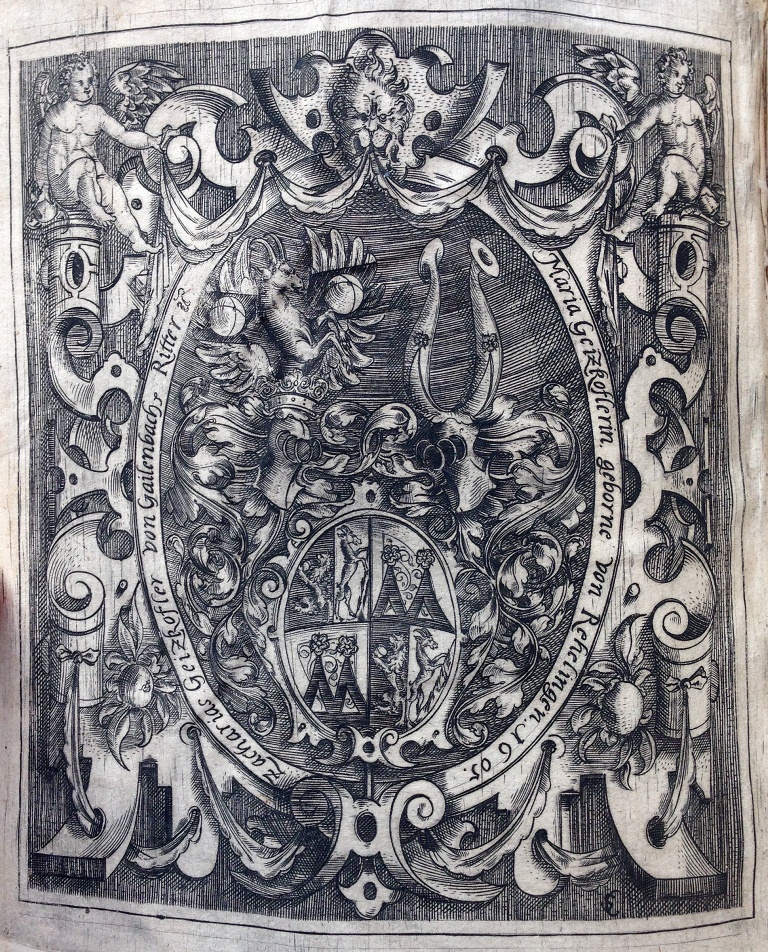
Bookplate of Zacharias Geizkofler von Gailenbach

This beautifully engraved bookplate is the most physically impressive piece of provenance evidence found among these three books. Measuring 17 x 14 cm, the ex libris belonged to Zacharias Geizkofler von Gailenbach (1560-1617), who had his name and that of his wife, Maria (nee von Rehelingen), along with her date of birth, engraved along the central oval frame. From 1597, Geizkofler served as Reichspfennigmeister (treasurer) of the Holy Roman Empire, and as an adviser to the emperors Rudolf II (1552-1612) and Matthias (1557-1619).

Lipsius title page

The Lipsius eventually travelled to what was Austria-Hungary. There it came into the possession of the noble Magyar family, Zichy, though which family member has yet to be confirmed. The title-page is stamped with the arms and name of Count Ödön Zichy. This may refer to Count Ödön (1809-1848), a governmental administrator who was executed as a result of a court martial, or Count Ödön (1811-1894), founder of the Oriental Museum in Vienna and a great patron of art and industry.

Bookplate of Jan Szasz

The second Hungarian collector to own this book was Jan Szasz, about whom I have been able to find very little.[6] It appears, however, that Szasz immigrated to the Antipodes, for a number of books with his bookplate are found in Australian institutional and private libraries.

Purchased by the Ivy M. Pendlebury bequest in memory of Gerald Frederic Pendlebury.

---

[1] See A.S.G. Edwards, Nicolas Barker at Eighty: A List of His Publications to Mark His 80th Birthday (New Castle, DE; London: Oak Knoll Press; Bernard Quaritch Ltd., 2013).

[2] Do you recognise the ‘B. Couissinier’ bookplate? If you know who he or she was, please leave a comment or email me at Special Collections.

[3] Selecta artis typographicae monumenta e bibliotheca Heideggeriana sive Catalogus librorum seculo XV impressorum … qui pro adjectis in margine pretiis publica auctionis lege divenduntur d. 18. Jun…(Zurich, 1810)

[4] The Gutenberg Bible volume was purchased by the Maruzen Co. of Tokyo for USD $5.3m (with premium) in the 22 October 1987 sale (lot 1). It was acquired by Keio University Library in March 1996.

[5] The Estelle Doheny Collection … Part III: Printed Books and Manuscripts including Western Americana (New York: Christie, Manson & Woods, 1988) 173 (lot 559)

[6] As with the book label of M. or Mme Couissinier, I would welcome any information on this collector named Szasz.

21 January 2014

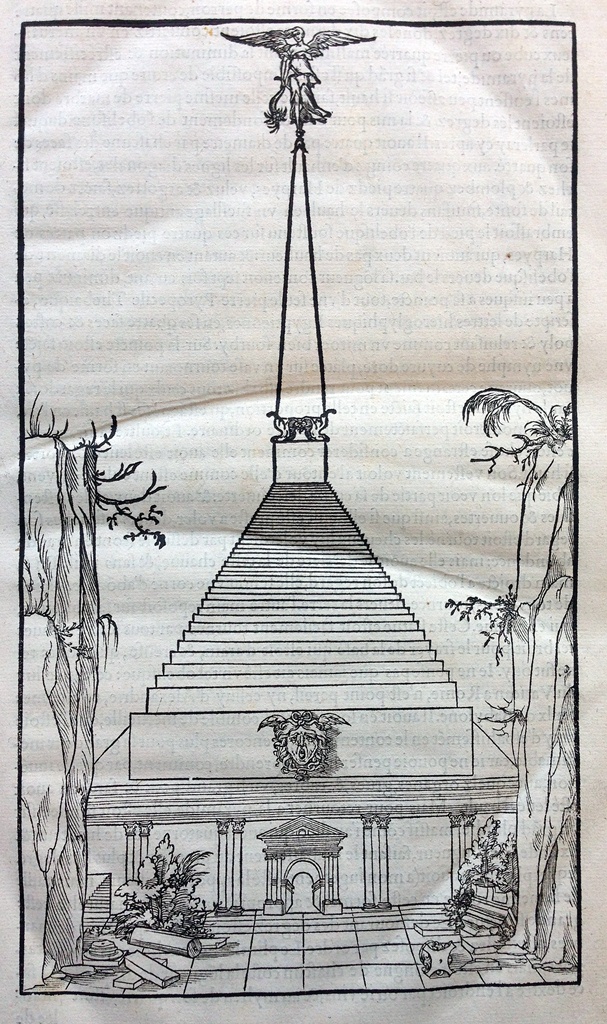
Hypnerotomachia Poliphili: Woodcuts in the Italian and French Editions

First published by Aldus Manutius in 1499 and praised for its typographical design and early Renaissance woodcut illustrations, the Hypnerotomachia Poliphili is one of the most famous books to come from a fifteenth-century press.

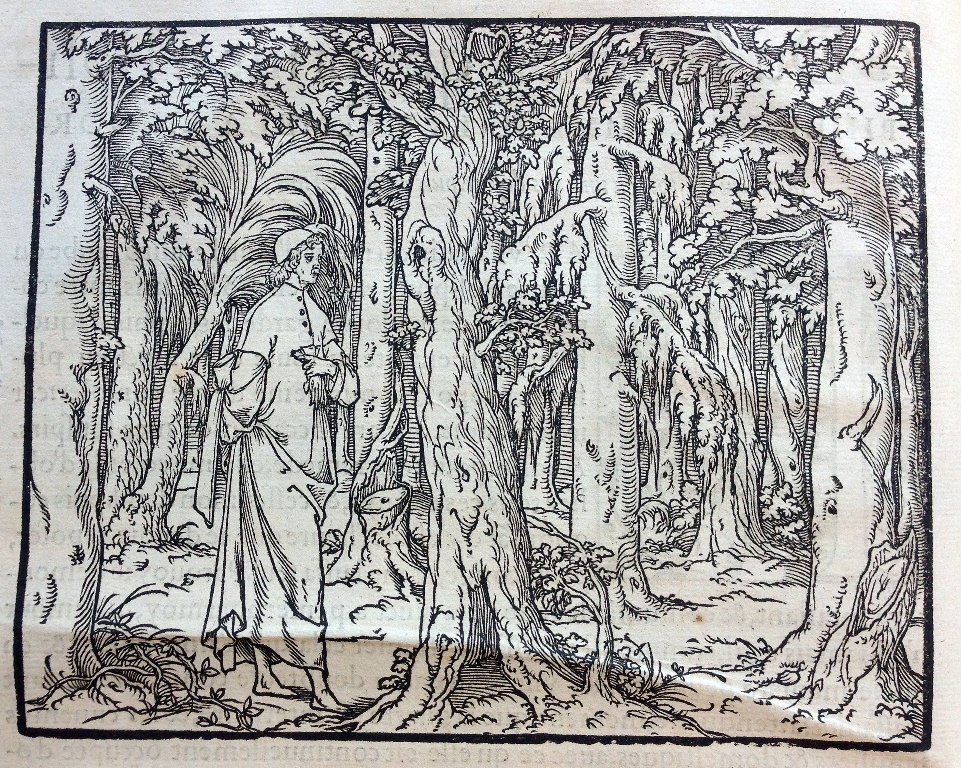
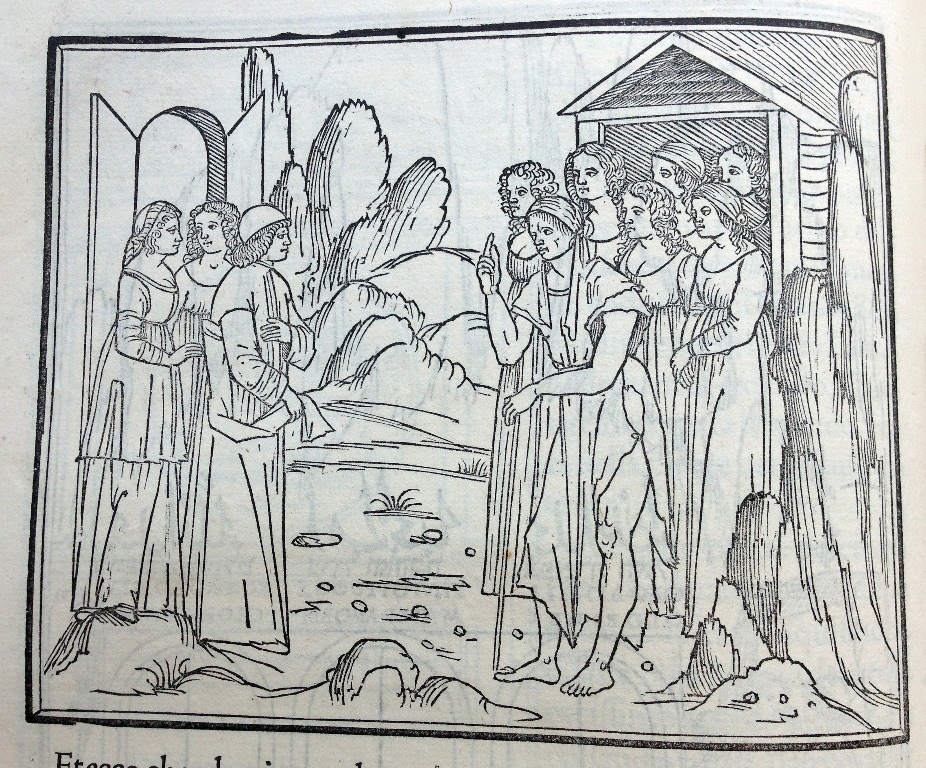
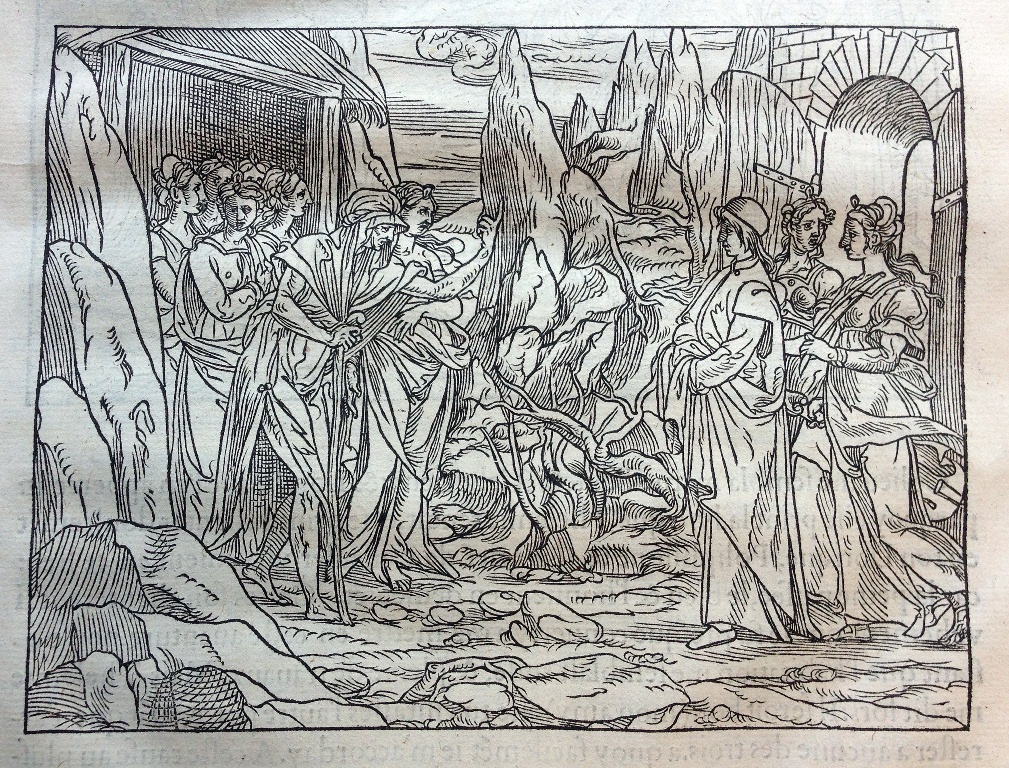
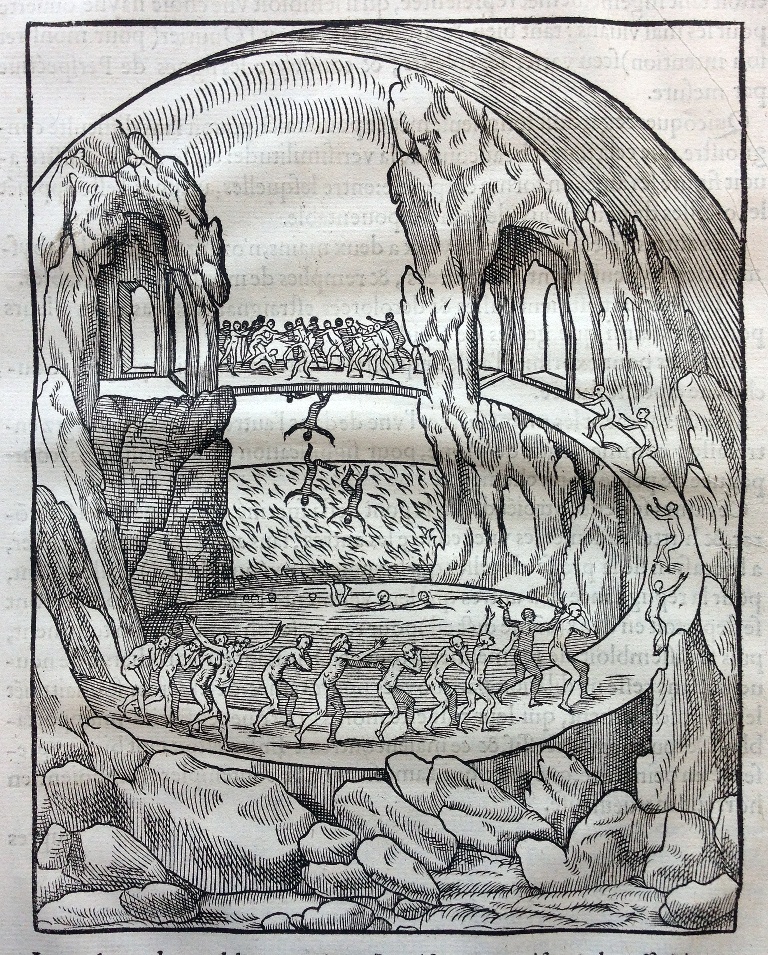
A second Aldine edition appeared in 1545, followed by the first French edition in 1546. Titled Hypnerotomachie, ou, Discours du Songe Poliphile, the translation was printed in Paris by Jacques Kerver. Its woodcuts in the Mannerist style were based on the Aldine editions, but adapted to suit French tastes and included an additional 14 illustrations.

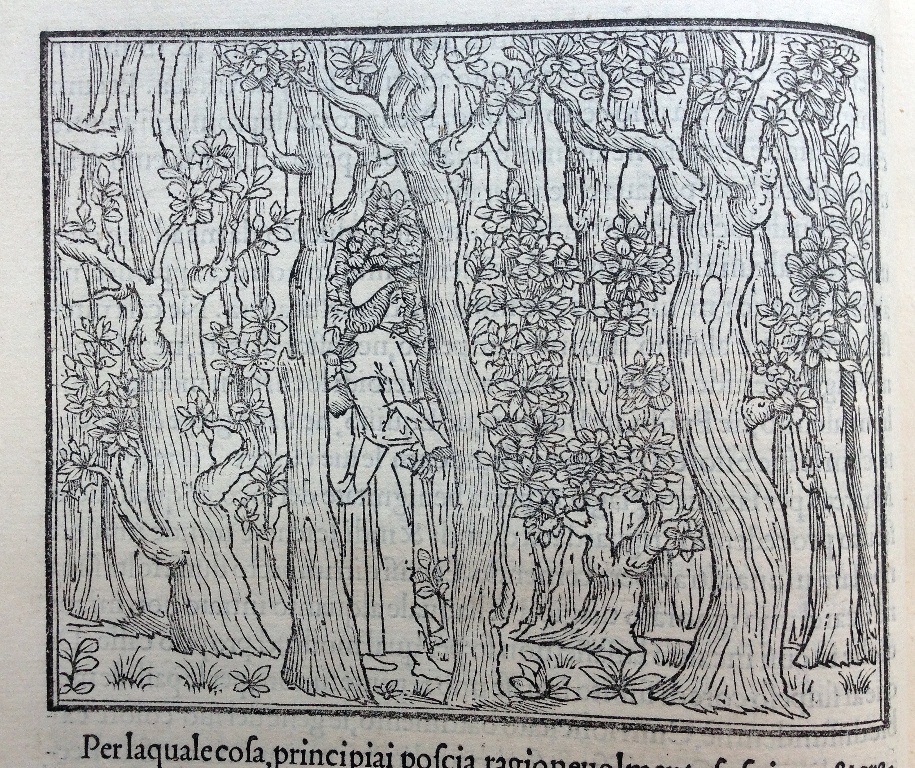
The identity of the artists who executed the woodcuts in the Italian and French editions remains a subject of debate amongst academic circles. The designs in the 1499 edition have been associated with Benedetto Bordon, Andrea Mantegna, Gentile Bellini, and even a young Raphael.[1] The illustrations in the 1546 French edition exhibit evidence of more than one artist at work, with the painter Jean Cousin and the architect and sculptor Jean Goujon considered likely candidates for the best woodcuts.

University of Melbourne Special Collections is fortunate to count the first Italian and French editions of the Hypnerotomachia amongst its holdings of early printed material, allowing for the following comparison of illustrations in two of the hand-press period’s most beautifully illustrated books.


Poliphilo enters a pathless forest (1499)


Poliphilo enters a pathless forest (1546)


Poliphilo encounters a wolf in his dreamscape (1499)


Poliphilo encounters a wolf in his dreamscape (1546)


The pyramid with obelisk (1499)


The pyramid with obelisk (1546)


Dancers carved on the base of a statue (1499)


Dancers carved on the base of a statue (1546)


Poliphilo chased by a dragon (1499)
Poliphilo flees from a dragon (1499)


Poliphilo chased by a dragon (1546)
Poliphilo flees from a dragon (1546)


Poliphilo meets Theude and her servants (1499)


Poliphilo meets Theude and her servants (1546)


From the second triumph (1499)


From the second triumph (1546)


The bridge over the frozen lake; where are the souls? (1499)


The bridge over the frozen lake; complete with souls (1546)

07 January 2014

Bound for a Russian Princess


Towards the end of last year I highlighted a collection of Russian satirical journals and postcards from the 1905 Revolution. Today’s post continues the Russian theme by examining the provenance of an early twentieth-century set of the complete works of Tolstoy.


Frontispiece and title-page, Complete Works of Tolstoy (1913)


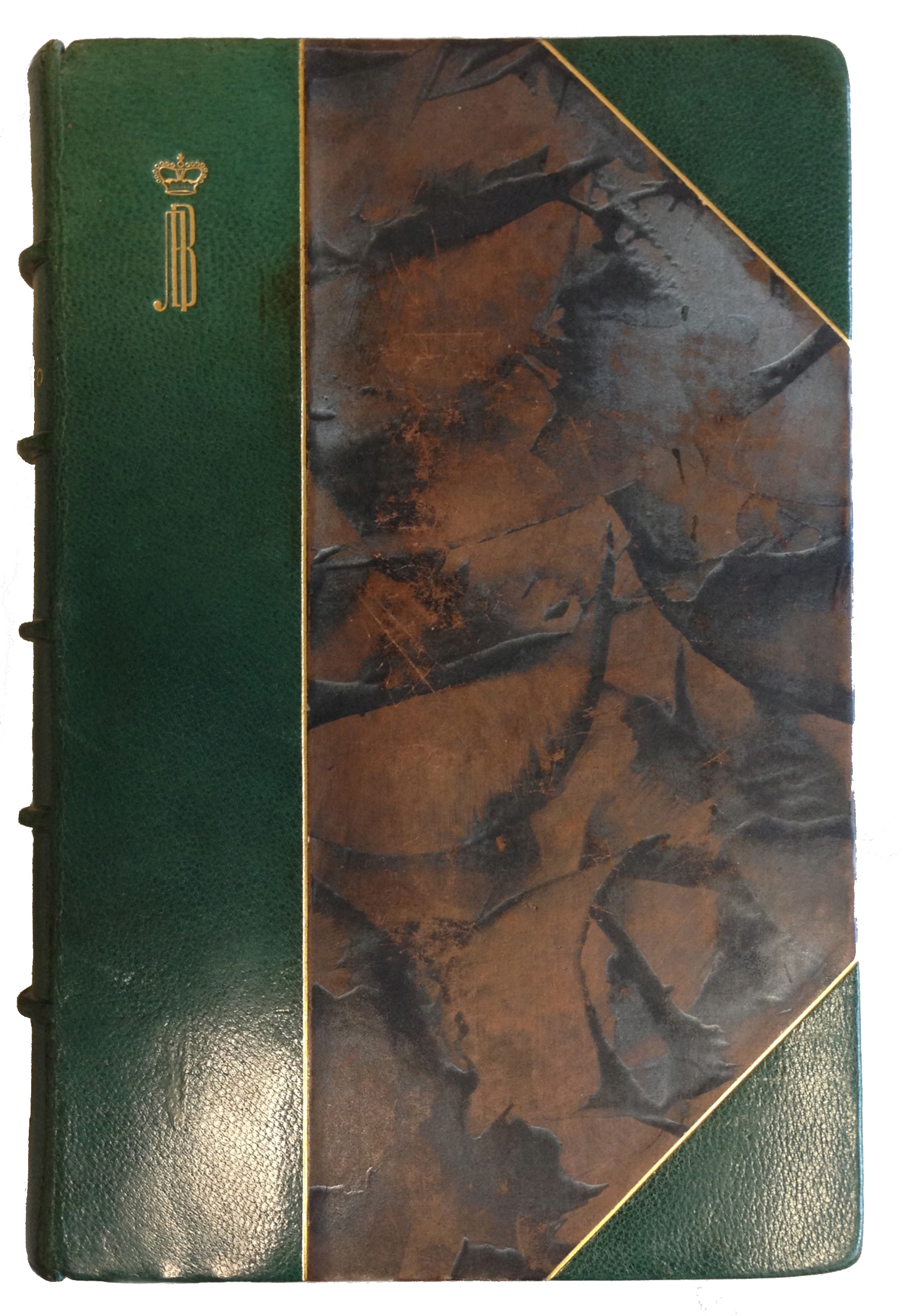
The set was published in St. Petersburg by P. V. Lukovnikov in 1913 and 1914. It consists of four volumes bound in two. The first two volumes are from the twenty-first edition and volumes three and four from the twenty-sixth and forty-sixth editions respectively. The attractive binding is three-quarter green morocco with marbled boards and pastedowns. In the upper-left corner of the front board on both volumes is a gilt-stamped ownership mark: the Cyrillic letters ‘Λ Β’ (‘L V’) with a crown above:

Binding with Vasilchikova stamp

Through a colleague of the antiquarian book dealer Simon Beattie, the ownership stamp has been identified as belonging to Princess Lydia Leonidovna Vyazemsky Vasilchikova (1886–1948). The set is from Vasilchikova’s private library in St. Petersburg and was likely bound by A. A. Schnell, a master bookbinder working for the Russian Imperial Court.


Portrait of Princess Lydia Leonidovna Vyazemsky Vasilchikova (www.genealogics.org)


The Family
Lydia’s father was Prince Leonid Dmitrievitch Vyazemsky (1848–1909), a general in the Russian cavalry, Governor of Astrakhan, and member of the Council of the Empire. On 12 May 1909, Lydia married Prince Illarion Sergeyevich Vasilchikov (1881–1969), who belonged to one of Russia’s oldest aristocratic families and served as a member of the Fourth Duma under Tsar Nicholas II.

Lydia, however, was not a stereotypical staid wife of a politician. According to Beattie’s contact, she studied English at Oxford, was fluent in several European languages, and was fond of horse riding and photography. She served as a Red Cross nurse close to the Eastern Front during the First World War, and was awarded four medals, including two St George medals for bravery.

In 1919, the Vasilchikovs fled the upheaval and violence of the 1917 Revolution aboard the SS Princess Ena, sent to Russia by Britain's George V to rescue his aunt the Empress Marie Feodorovna. Destitute, the Vasilchikovs travelled across Europe as refugees to the family's Lithuanian estates. During the Second World War, two of their children, Tatiana and Marie, moved to Berlin in 1940 to find work and were employed by the Foreign Ministry’s Information Office. The sisters later published books about their experiences: Tatiana: Five Passports in a Shifting Europe (1976) and Marie’s Berlin Diaries: 1940–1945 (1988).

The Library
Unfortunately, little information exists regarding the Vasilchikov family libraries, except that they owned several collections in St. Petersburg, Moscow, and throughout their numerous estates. It was learnt through Beattie’s contact that many family members were killed after the 1917 Revolution, and their books sold or intentionally destroyed during the 1920s and 1930s; a sad fate that befell many of Russia’s aristocratic families and their collections during those turbulent early decades of the Soviet Union.

--

Polnoe sobranīe sochinenīĭ gr. A.K. Tolstogo (St. Petersburg: [P. V. Lukovnikov], 1913-1914); from the personal library of Princess Lydia Leonidovna Vyazemsky Vasilchikova; donated to the Melbourne University Library by Mrs. O. P. Hohlov in 1968.

28 October 2013

University of Melbourne Acquires Germaine Greer's Archive

News broke a few hours ago that the University of Melbourne has acquired the archive of one of its leading alumni, the notable academic and feminist, Germaine Greer.

According to the write-up in The Guardian:

'The archive, including manuscripts of Greer's books, her diaries and correspondence with some of the most significant intellectuals and politicians of the past century, fills more than 150 filing cabinets and spans the years from her student life in Melbourne, Sydney and Cambridge to the present day. It includes early notes for and a synopsis of her groundbreaking bestseller The Female Eunuch, as well as diaries and letters to her lovers, family and friends ... The correspondence files include letters from the novelist Margaret Atwood, activist Abbie Hoffman, film director and actor Warren Beatty (who was at one time Greer's lover), art critic John Berger, former Pakistan prime minister Benazir Bhutto, film director Federico Fellini, former Indian prime minister Indira Gandhi, writer and television personality Clive James, feminist writer Dale Spender and many more'.

The University of Melbourne Vice-Chancellor Professor Glyn Davis said the university will ship, catalogue and digitise the archive, which will be exhibited at the university.

The archive is expected to arrive in Melbourne in July 2014. Proceeds from the $3m purchase will go to the Friends of Gondwana Rainforest.

Announcement and 'About the Archive' on the University of Melbourne, University Library, website.

25 July 2013

600 Years of Italian Books Exhibition, University of Melbourne


The latest exhibition in the Baillieu Library, University of Melbourne, is ‘Libri: Six Centuries of Italian Books from the Baillieu Library’s Special Collections’. The display, on view in the Leigh Scott Gallery, is in connection with Melbourne Rare Book Week, and highlights the university’s recent acquisition of the first edition of Aldus Manutius’s typographical masterpiece, the Hypnerotomachia Poliphili (Venice, 1499), which takes centre stage.


Polia and Poliphilo (centre) enter the Garden of Venus (Chap. 24)

Among the fifty-two items on display are: an illuminated fourteenth-century Gradual leaf attributed to a follower of the Perugian artist Matteo di Ser Cambio, early editions of works by Machiavelli, Palladio, Vasari and Leonardo da Vinci, and later texts by such authors as Alessandro Manzoni, Italo Svevo and Primo Levi, and the futurists F. T. Marinetti and Bruno Munari. Case themes cover politics, literature and the arts, travel, humanism and futurism, and Italians living in Australia, such as the Melbourne-based visual artists Bruno Leti and Angela Cavalieri, whose respective works Imago Mundi (2002; with text by Alan Loney) and Inri (2005) are on display.


An Italian-themed exhibition would not be complete without a cookbook, in this case a seventeenth-century edition of the great Renaissance chef Bartolomeo Scappi's Opera dell'arte del cucinare (Venice, 1610)

It would be remiss (negligente is more appropriate) of me to write a post about an exhibition of Italian books and not note that 2013 marks the 500th anniversary of Machiavelli's The Prince and the 700th anniversary of the birth of Giovanni Boccaccio, perhaps best known for his allegorical work The Decameron

Books relating to both authors are on display, such as Frederick the Great's Examen du Prince de Machiavel (The Hague, 1741), an Italian edition of The Prince (Milan, 1928) with a preface by Benito Mussolini, a sixteenth-century edition of Boccaccio's mythography La geneologia de gli dei de gentili (Venice, 1569), in which he attempts to untangle the genealogy of the Greek and Roman pantheons, and J. M. Rigg's translation of The Decameron, published in Sydney by Angus and Robertson in 1941.

The exhibition runs until 15 September, after which the gallery will be closed for redevelopment. Follow this link to view a selection of the exhibits.

30 June 2012

Rare Book Week in Melbourne

Kay Craddock's Bookshop
156 Collins St.
Next month sees the launch of the inaugural Melbourne Rare Book Week in conjunction with the biennial University of Melbourne Cultural Treasures Festival and the 39th ANZAAB Antiquarian Book Fair.

Being held from 19 to 29 July, Rare Book Week includes 'a series of informative and entertaining lectures, events and exhibitions celebrating the book and the joy of collecting.... If you are curious about books and what makes them collectable, and fascinated by ephemeral items that capture the spirit of a time, or you are drawn to prints that illustrate our history and maps that reflect the peaks and perils of travel and adventure, then Melbourne is the place to be in July'.

A full list of events, all but one of which are free to attend, is available on the Rare Book Week programme page.