Temporary

Showing posts with label early printed books. Show all posts

21 January 2014

Hypnerotomachia Poliphili: Woodcuts in the Italian and French Editions

First published by Aldus Manutius in 1499 and praised for its typographical design and early Renaissance woodcut illustrations, the Hypnerotomachia Poliphili is one of the most famous books to come from a fifteenth-century press.

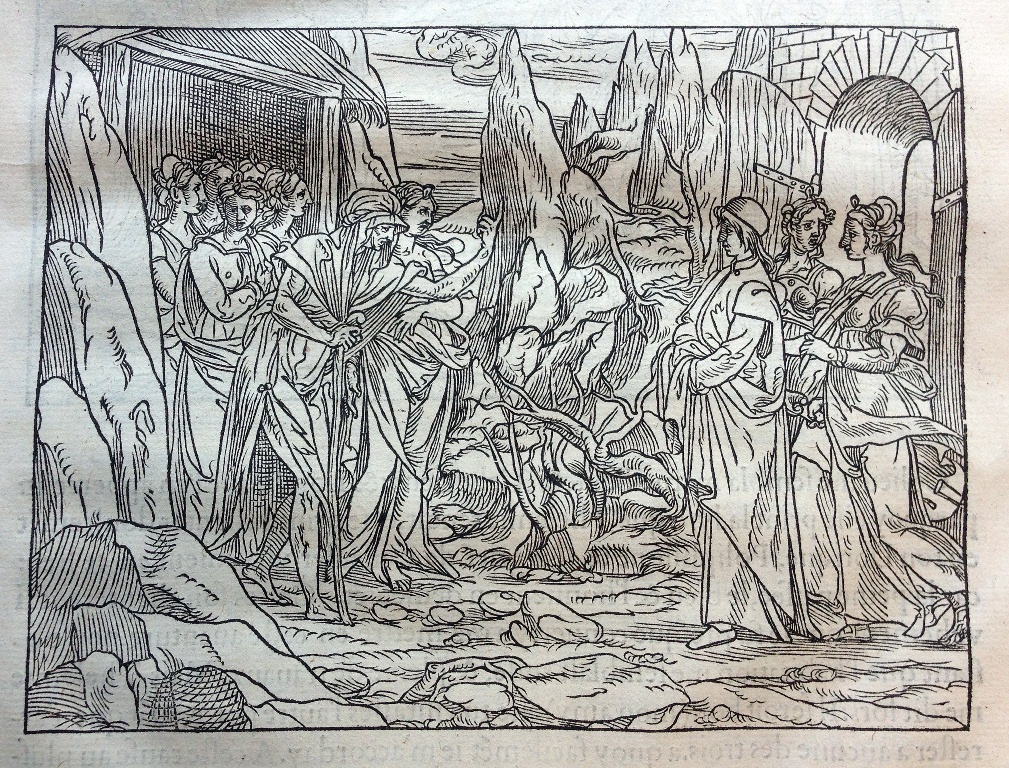
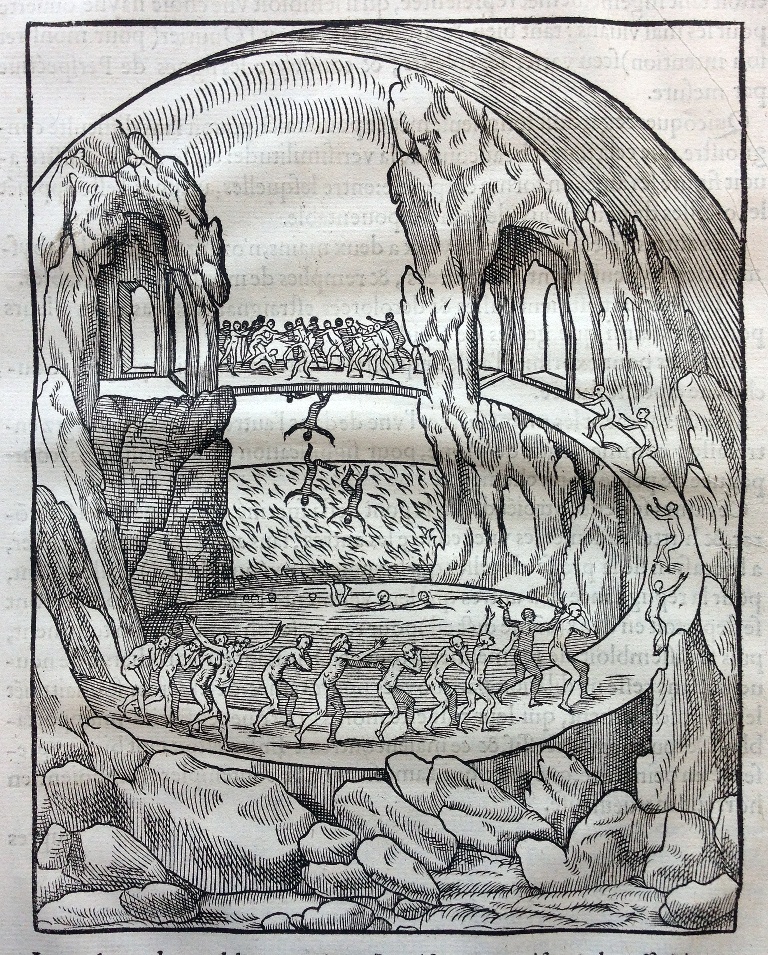
A second Aldine edition appeared in 1545, followed by the first French edition in 1546. Titled Hypnerotomachie, ou, Discours du Songe Poliphile, the translation was printed in Paris by Jacques Kerver. Its woodcuts in the Mannerist style were based on the Aldine editions, but adapted to suit French tastes and included an additional 14 illustrations.

The identity of the artists who executed the woodcuts in the Italian and French editions remains a subject of debate amongst academic circles. The designs in the 1499 edition have been associated with Benedetto Bordon, Andrea Mantegna, Gentile Bellini, and even a young Raphael.[1] The illustrations in the 1546 French edition exhibit evidence of more than one artist at work, with the painter Jean Cousin and the architect and sculptor Jean Goujon considered likely candidates for the best woodcuts.

University of Melbourne Special Collections is fortunate to count the first Italian and French editions of the Hypnerotomachia amongst its holdings of early printed material, allowing for the following comparison of illustrations in two of the hand-press period’s most beautifully illustrated books.


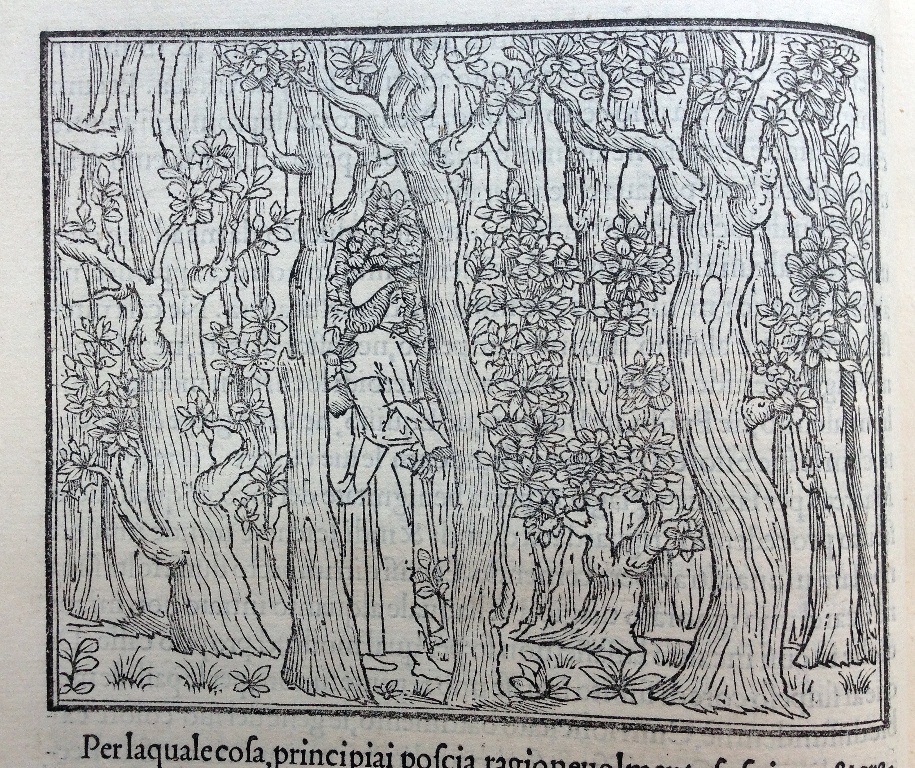
Poliphilo enters a pathless forest (1499)


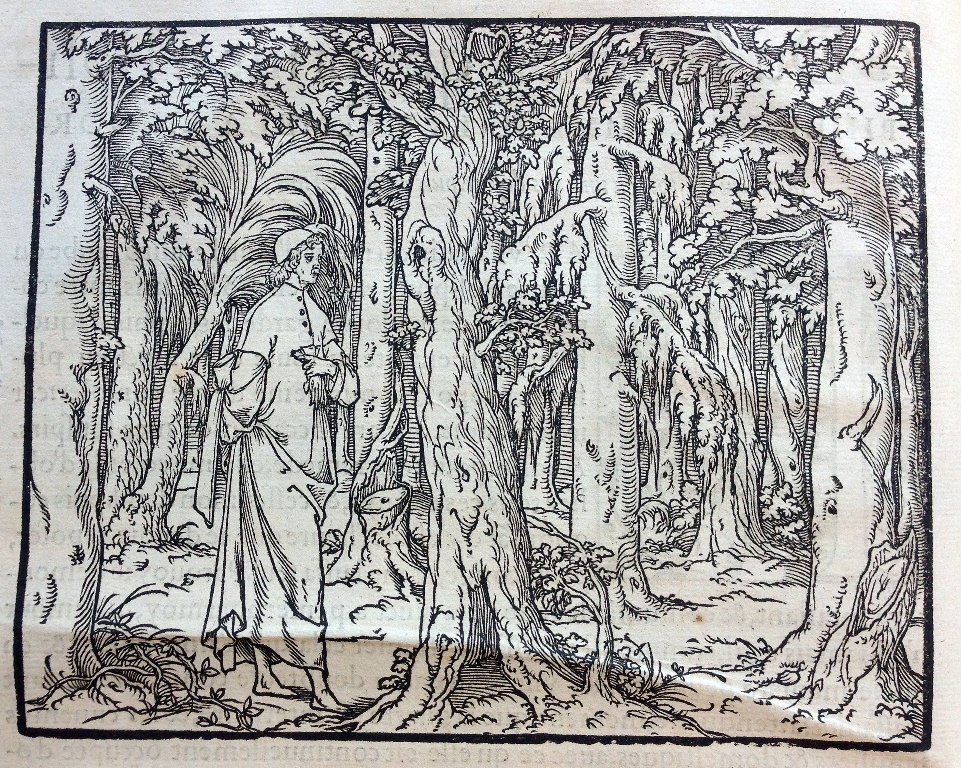
Poliphilo enters a pathless forest (1546)


Poliphilo encounters a wolf in his dreamscape (1499)


Poliphilo encounters a wolf in his dreamscape (1546)


The pyramid with obelisk (1499)


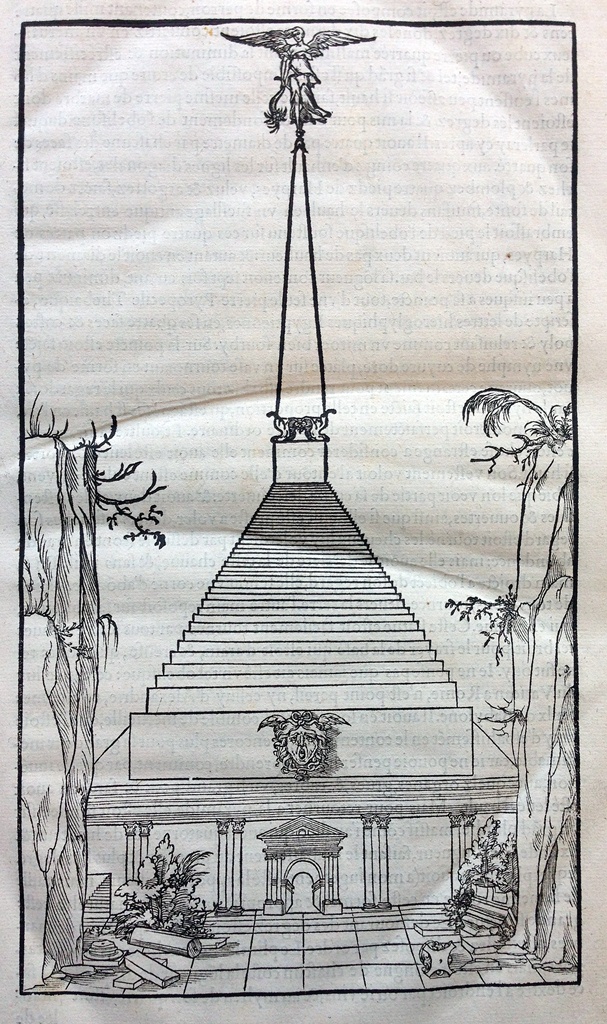
The pyramid with obelisk (1546)


Dancers carved on the base of a statue (1499)


Dancers carved on the base of a statue (1546)


Poliphilo chased by a dragon (1499)
Poliphilo flees from a dragon (1499)


Poliphilo chased by a dragon (1546)
Poliphilo flees from a dragon (1546)


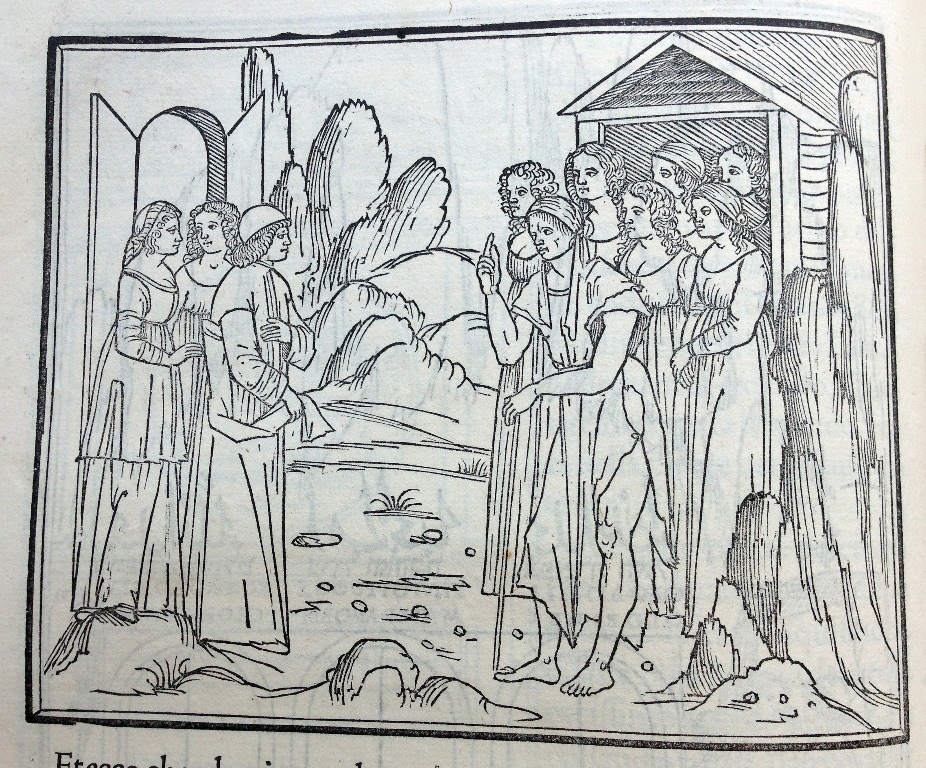
Poliphilo meets Theude and her servants (1499)


Poliphilo meets Theude and her servants (1546)


From the second triumph (1499)


From the second triumph (1546)


The bridge over the frozen lake; where are the souls? (1499)


The bridge over the frozen lake; complete with souls (1546)

03 April 2013

Catalogue of Incunabula, Dunedin City Library

Leaf from the Gutenberg Bible (ca. 1455)
A few years ago I began compiling an annotated catalogue of fifteenth-century printing held by the Heritage Collections, Dunedin City Library. That work was set aside when I started my MA thesis. Now, with the thesis completed last August, I have at last been able to finish the work.

The catalogue records seven bound incunabula and more than ninety leaves and fragments, with commentary on the texts, provenance, and printers. I have also included links to fully digitised copies where available.

Highlights from the collection include: one volume of the 1472 Latin Bible printed by Peter Schöffer, the oldest printed book held by the Library; a 1476 edition of the Legenda aurea sanctorum from the noted collections of Sir James Balfour (ca. 1600–1658) and David Dalrymple, Lord Hailes (1726–1792); leaves from the Nuremberg Chronicle (1493), a leaf from William Caxton's first printed edition of The Canterbury Tales (1476/7), a leaf from the Catholicon (1460), and one leaf from the Gutenberg Bible (ca. 1454), the first book printed in Europe using movable type.

Rather than leave the catalogue solely for in-house use, I have uploaded the file (1.6MB) to Google Docs and my academia.edu account. Interested readers are welcome to view/ download the PDF and or share it with others.

A number of individuals provided invaluable assistance. Though these people are thanked in the catalogue introduction, I would like to express my appreciation to them here. Sincere thanks go to:

Jordan Goffin (Providence Public Library), Klaus Graf (University of Freiburg), Farley Katz (San Antonio, Texas), Donald Kerr (Special Collections, University of Otago), Francis Lapka (Yale Centre for British Art, Yale University), Paul Needham (Scheide Library, Princeton University), Stephen Tabor (Huntington Library), Bettina Wagner (State Library, Munich) and Eric White (Bridwell Library, Southern Methodist University).

Special thanks go to Falk Eiserman, Oliver Dunst and Martina Nickel of the Gesamtkatalog der Wiegendrucke for their encouragement and willingness to receive images of unknown leaves and fragments, no matter how small or fragmentary; to Gabriel Swift (Princeton University) for his comments on the initial draft; and to the Berkeley-based bookseller, Ian Jackson, for his kindness in editing the final text.

I make no claims at being an incunabulist, and so welcome any corrections or added information by those more learned than myself.


Latin Bible (1472)

17 March 2013

Medieval Bookbindings Blog

A new blog created by Alexandra Gillespie, Associate Professor in English and Medieval Studies, University of Toronto, with contributions by Emeritus Professor Alexandra Barratt, University of Waikato:

http://medievalbookbindings.com/

Recent posts include a description and very clear images of a sixteenth-century binding and its medieval manuscript endleaves from the Sir George Grey Special Collections, Auckland Libraries, and Alexandra Barratt's discovery last year of vellum quire guards taken from an early ninth-century Carolingian Bible and sewn into a fifteenth-century binding (also in the Grey collection).

Sixteenth-century binding brass hook-clasp fastening and fore-edge book
marks; New Testament, probably Netherlands, late twelfth or early thirteenth century; Auckland Libraries, Sir George Grey Special Collections, Med. MS G.140
Alexandra G. and Alexandra B. have done great work identifying and expanding upon what is known about early bindings, and the manuscript waste found in them, held in New Zealand collections. The site will cover a variety of bibliocentric topics (not just New Zealand and not just bindings), so I am definitely excited about future posts!

If interested in receiving email alerts, click the 'Follow' function icon towards the bottom of the page/ screen (may not appear in Chrome).