Temporary

21 January 2014

Hypnerotomachia Poliphili: Woodcuts in the Italian and French Editions

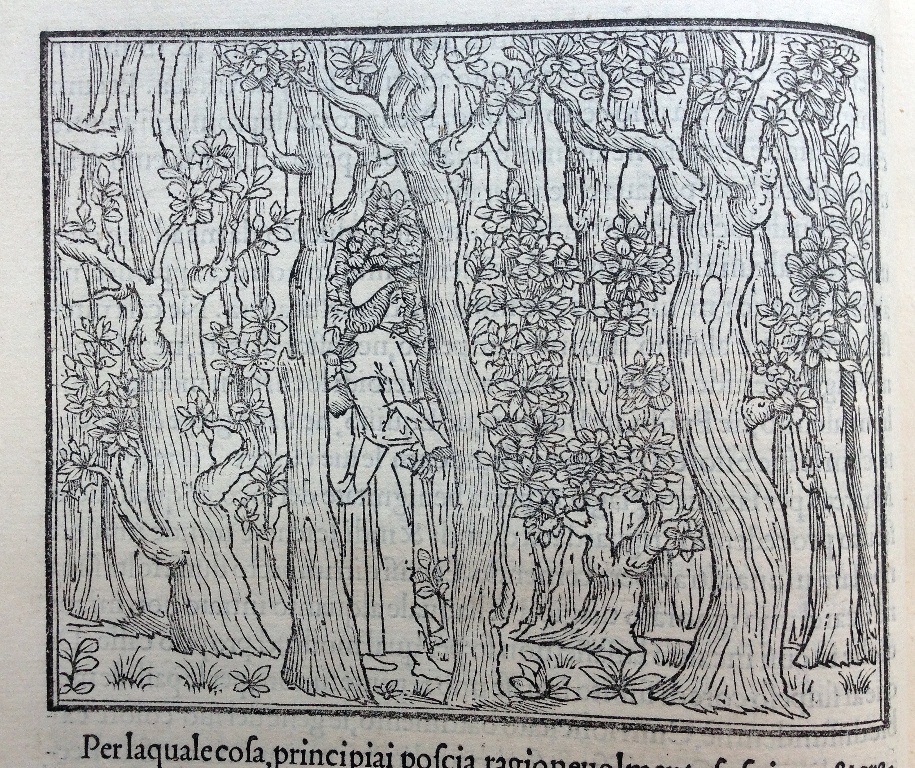
First published by Aldus Manutius in 1499 and praised for its typographical design and early Renaissance woodcut illustrations, the Hypnerotomachia Poliphili is one of the most famous books to come from a fifteenth-century press.

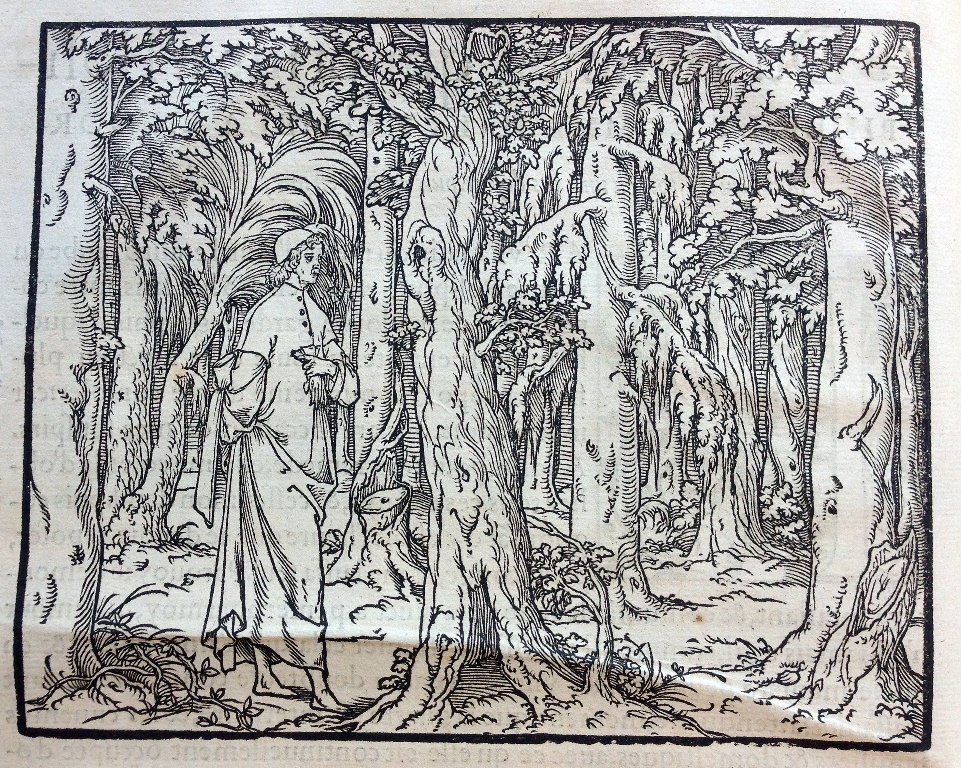
A second Aldine edition appeared in 1545, followed by the first French edition in 1546. Titled Hypnerotomachie, ou, Discours du Songe Poliphile, the translation was printed in Paris by Jacques Kerver. Its woodcuts in the Mannerist style were based on the Aldine editions, but adapted to suit French tastes and included an additional 14 illustrations.

The identity of the artists who executed the woodcuts in the Italian and French editions remains a subject of debate amongst academic circles. The designs in the 1499 edition have been associated with Benedetto Bordon, Andrea Mantegna, Gentile Bellini, and even a young Raphael.[1] The illustrations in the 1546 French edition exhibit evidence of more than one artist at work, with the painter Jean Cousin and the architect and sculptor Jean Goujon considered likely candidates for the best woodcuts.

University of Melbourne Special Collections is fortunate to count the first Italian and French editions of the Hypnerotomachia amongst its holdings of early printed material, allowing for the following comparison of illustrations in two of the hand-press period’s most beautifully illustrated books.


Poliphilo enters a pathless forest (1499)


Poliphilo enters a pathless forest (1546)


Poliphilo encounters a wolf in his dreamscape (1499)


Poliphilo encounters a wolf in his dreamscape (1546)


The pyramid with obelisk (1499)


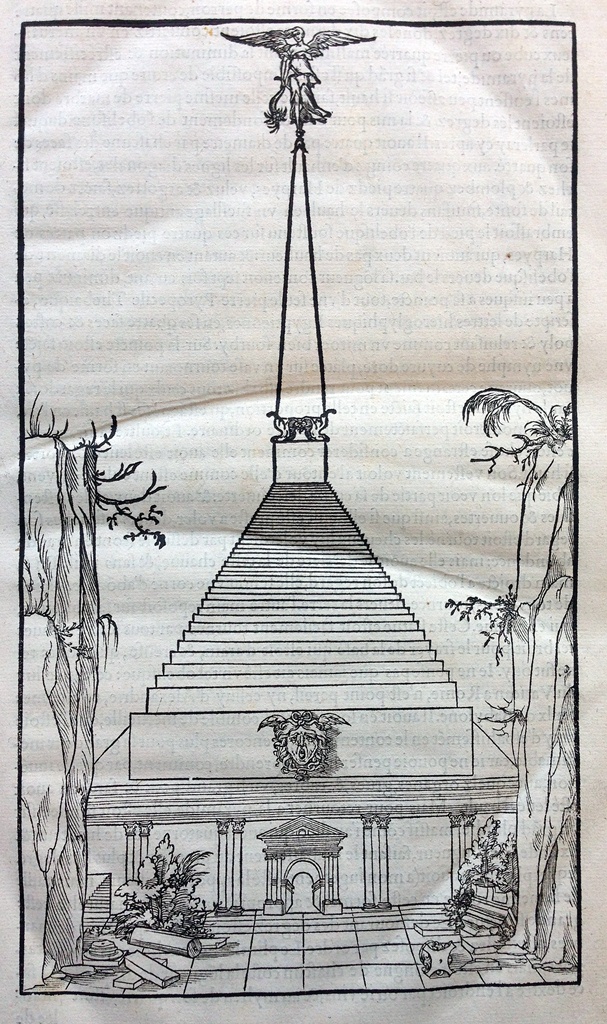
The pyramid with obelisk (1546)


Dancers carved on the base of a statue (1499)


Dancers carved on the base of a statue (1546)


Poliphilo chased by a dragon (1499)
Poliphilo flees from a dragon (1499)


Poliphilo chased by a dragon (1546)
Poliphilo flees from a dragon (1546)


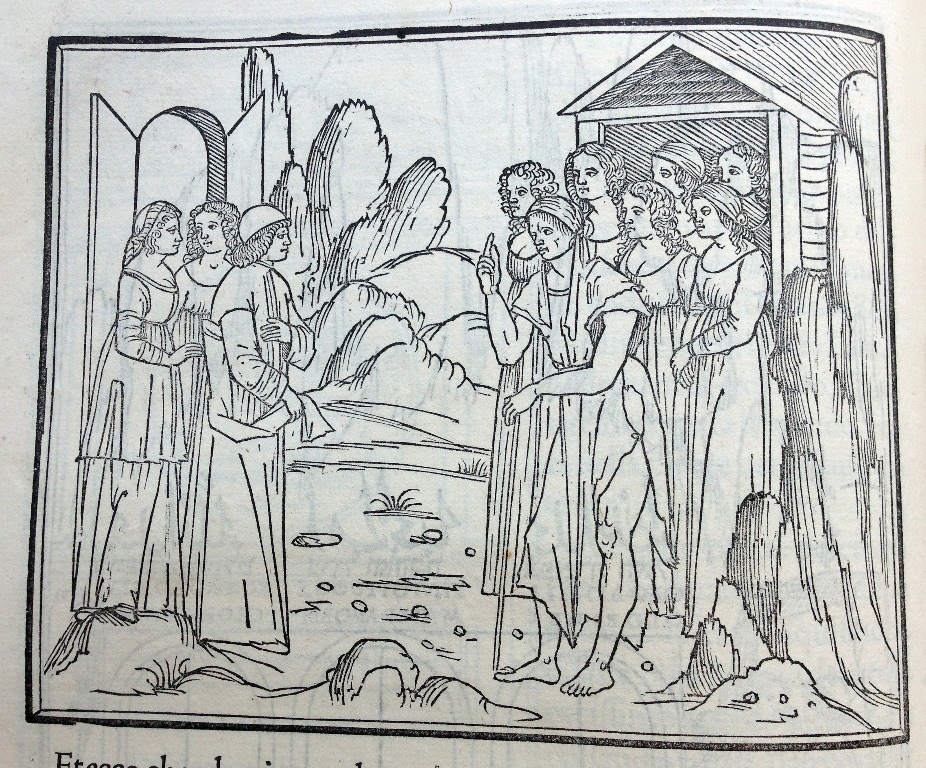
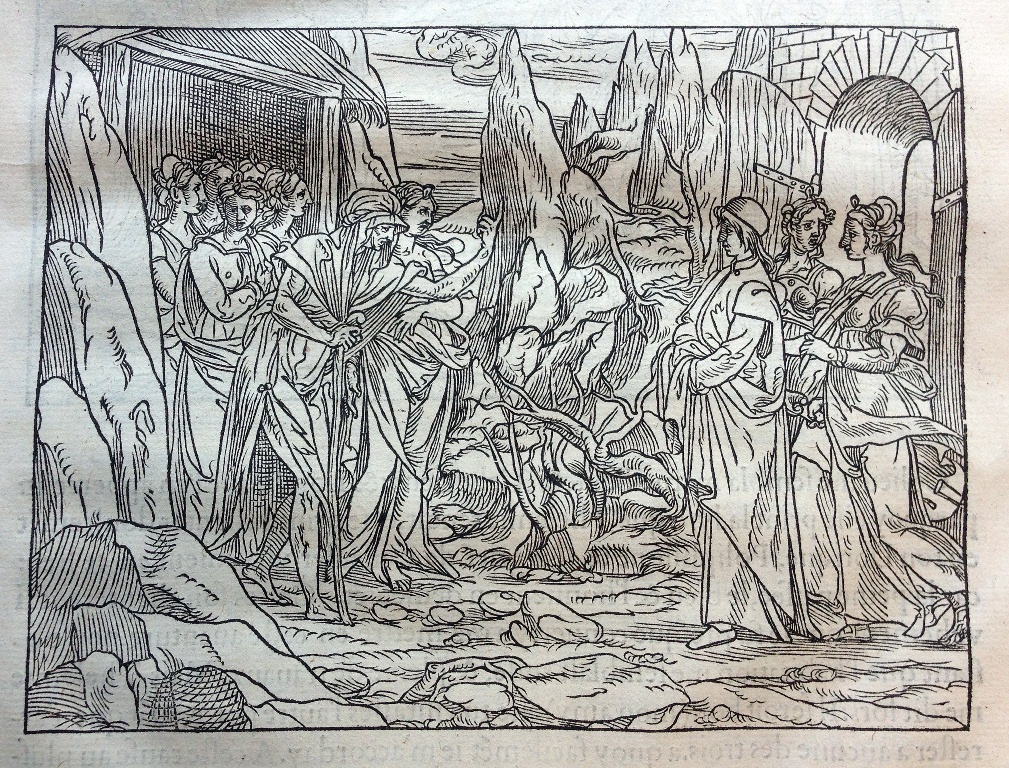
Poliphilo meets Theude and her servants (1499)


Poliphilo meets Theude and her servants (1546)


From the second triumph (1499)


From the second triumph (1546)


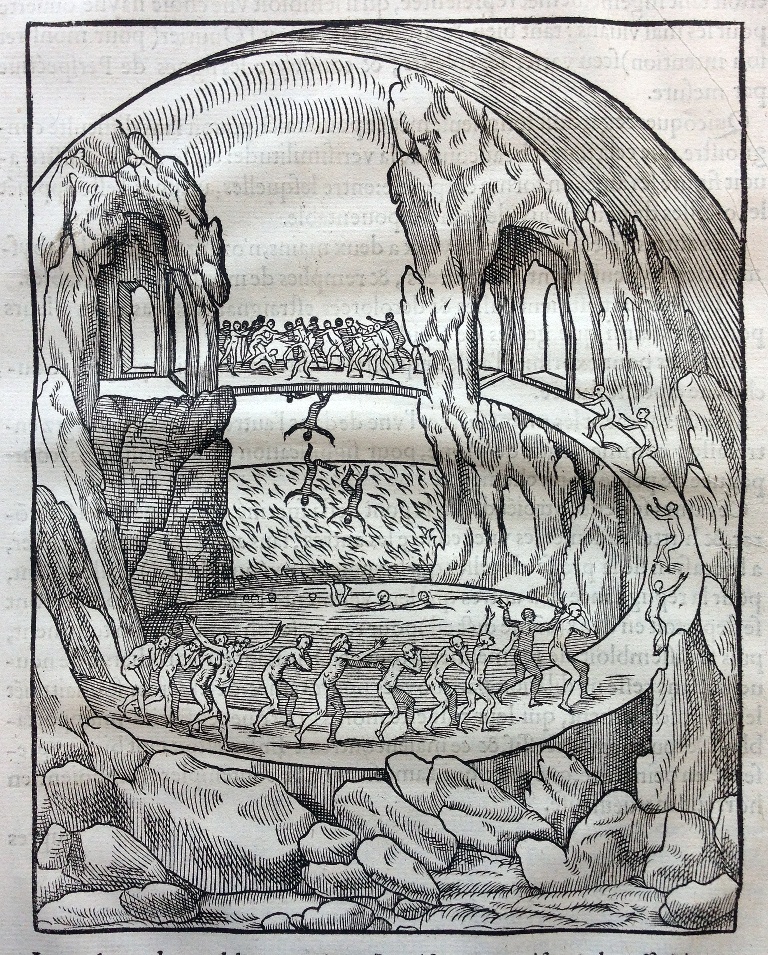
The bridge over the frozen lake; where are the souls? (1499)


The bridge over the frozen lake; complete with souls (1546)

16 January 2014

Sixteenth-Century Manuscript Could Rewrite Australian History [Updated]

[Update, 18.01.14: 'That's No Kangaroo on the Manuscript' from livescience.com]

Story from today's The Age reported by Charli Newton:

Image of what is thought to be a kangaroo on a 16th century processional could lend weight to the theory that the Portuguese were the first explorers to set foot in Australian soil, before the Dutch or English.
Image of what is thought to be a kangaroo on a 16th-century processional could lend weight to the theory that the Portuguese were the first explorers to set foot on Australian soil, before the Dutch or English.
A tiny drawing of a kangaroo curled in the letters of a 16th-century Portuguese manuscript could rewrite Australian history.

The document, acquired by Les Enluminures Gallery in New York, shows a sketch of an apparent kangaroo (''canguru'' in Portuguese) nestled in its text and is dated between 1580 and 1620. It has led researchers to believe images of the marsupial were already being circulated by the time the Dutch ship Duyfken - long thought to have been the first European vessel to visit Australia - landed in 1606.

The pocket-sized manuscript, known as a processional, contains text and music for a liturgical procession and is inscribed with the name Caterina de Carvalho, believed to be a nun from Caldas da Rainha in western Portugal.

The manuscript may precede what is believed to be the first European docking in Australia.
The European discovery of Australia has officially been credited to the Dutch voyage headed by Willen Janszoon in 1606, but historians have suggested the country may already have been explored by other western Europeans.

''A kangaroo or a wallaby in a manuscript dated this early is proof that the artist of this manuscript had either been in Australia, or even more interestingly, that travellers' reports and drawings of the interesting animals found in this new world were already available in Portugal,'' Les Enluminures researcher Laura Light said.

''Portugal was extremely secretive about her trade routes during this period, explaining why their presence there wasn't widely known.''

Peter Trickett, an award-winning historian and author of Beyond Capricorn, has long argued that a Portuguese maritime expedition first mapped the coast of Australia in 1521-22, nearly a century before the Dutch landing.

''It is not surprising at all that an image of a kangaroo would have turned up in Portugal at some point in the latter part of the 16th century. It could be that someone in the Portuguese exhibition had this manuscript in their possession,'' Mr Trickett said.

National Library of Australia curator of maps Martin Woods said that while the image looked like a kangaroo or a wallaby, it alone was not proof enough to alter Australia's history books.

''The likeness of the animal to a kangaroo or wallaby is clear enough, but then it could be another animal in south-east Asia, like any number of deer species, some of which stand on their hind legs to feed off high branches,'' Dr Woods said.

''For now, unfortunately the appearance of a long-eared big-footed animal in a manuscript doesn't really add much.''

Les Enluminures Gallery, which lists the manuscript's value at $US15,000 ($16,600), acquired the processional from a rare book dealer in Portugal and will exhibit the piece as part of an exhibition.

Also entwined in letters of the text are two male figures adorned in tribal dress, baring naked torsos and crowns of leaves, which Ms Light said could be Aborigines.

Fellow of the Australian Academy of the Humanities, John Gascoigne, said proving that the Portuguese were the first Europeans to arrive in Australia would be ''forever difficult to document because of their secrecy and because so many of the records were destroyed in the Lisbon earthquake of 1755''.

''The possible date span for the manuscript goes up to 1620, which would accommodate the arrival of Willen Janszoon in the Duyfken in northern Australia in 1606,'' Professor Gascoigne said.

He speculated the images could come from a 1526 trip to Papua.

''Looking at it from a European perspective, it is surely evocative to wonder what these exotic images must have meant to the Portuguese nun gazing at them from within the confines of her convent's walls,'' Ms Light said.

07 January 2014

Bound for a Russian Princess


Towards the end of last year I highlighted a collection of Russian satirical journals and postcards from the 1905 Revolution. Today’s post continues the Russian theme by examining the provenance of an early twentieth-century set of the complete works of Tolstoy.


Frontispiece and title-page, Complete Works of Tolstoy (1913)


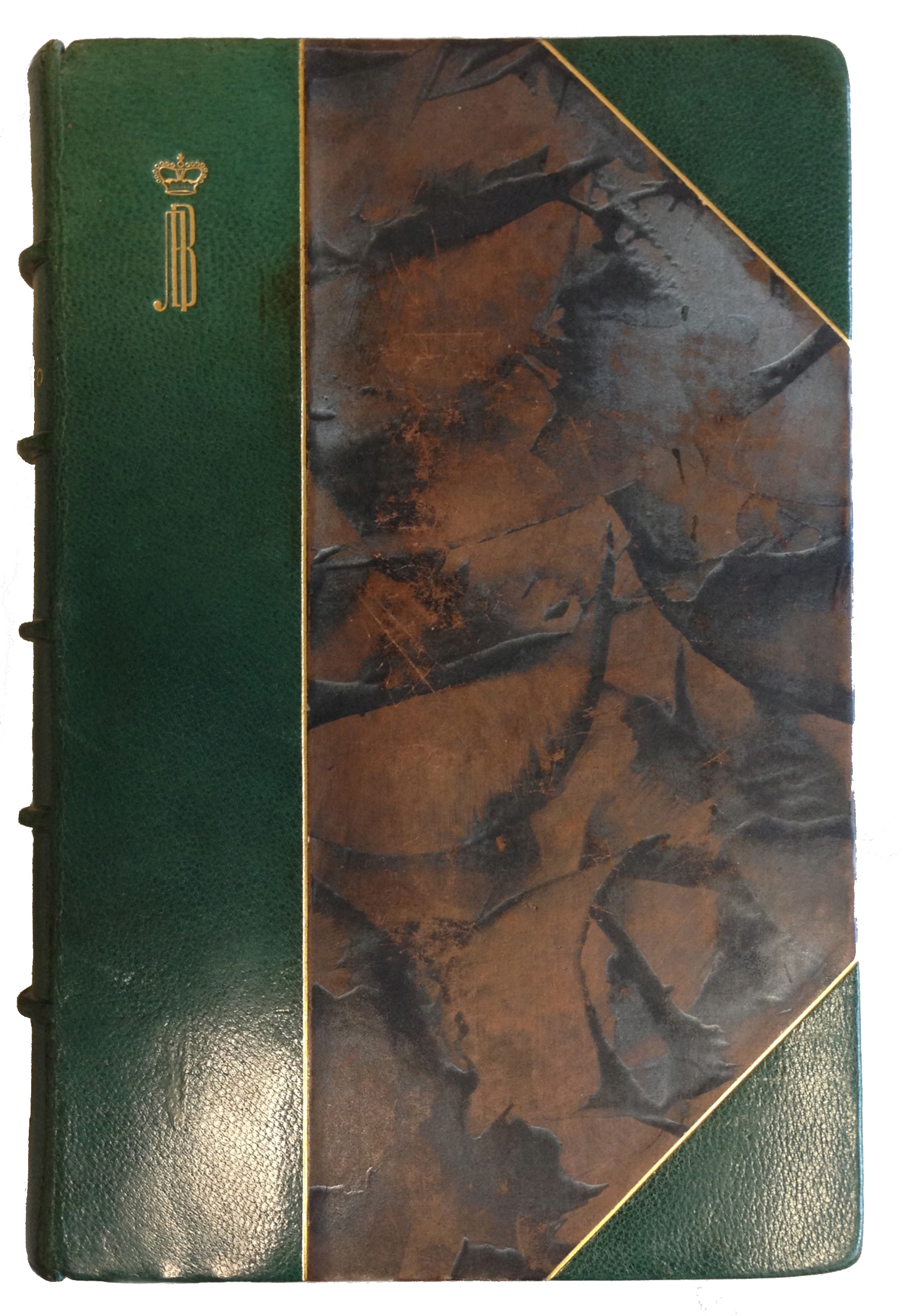
The set was published in St. Petersburg by P. V. Lukovnikov in 1913 and 1914. It consists of four volumes bound in two. The first two volumes are from the twenty-first edition and volumes three and four from the twenty-sixth and forty-sixth editions respectively. The attractive binding is three-quarter green morocco with marbled boards and pastedowns. In the upper-left corner of the front board on both volumes is a gilt-stamped ownership mark: the Cyrillic letters ‘Λ Β’ (‘L V’) with a crown above:

Binding with Vasilchikova stamp

Through a colleague of the antiquarian book dealer Simon Beattie, the ownership stamp has been identified as belonging to Princess Lydia Leonidovna Vyazemsky Vasilchikova (1886–1948). The set is from Vasilchikova’s private library in St. Petersburg and was likely bound by A. A. Schnell, a master bookbinder working for the Russian Imperial Court.


Portrait of Princess Lydia Leonidovna Vyazemsky Vasilchikova (www.genealogics.org)


The Family
Lydia’s father was Prince Leonid Dmitrievitch Vyazemsky (1848–1909), a general in the Russian cavalry, Governor of Astrakhan, and member of the Council of the Empire. On 12 May 1909, Lydia married Prince Illarion Sergeyevich Vasilchikov (1881–1969), who belonged to one of Russia’s oldest aristocratic families and served as a member of the Fourth Duma under Tsar Nicholas II.

Lydia, however, was not a stereotypical staid wife of a politician. According to Beattie’s contact, she studied English at Oxford, was fluent in several European languages, and was fond of horse riding and photography. She served as a Red Cross nurse close to the Eastern Front during the First World War, and was awarded four medals, including two St George medals for bravery.

In 1919, the Vasilchikovs fled the upheaval and violence of the 1917 Revolution aboard the SS Princess Ena, sent to Russia by Britain's George V to rescue his aunt the Empress Marie Feodorovna. Destitute, the Vasilchikovs travelled across Europe as refugees to the family's Lithuanian estates. During the Second World War, two of their children, Tatiana and Marie, moved to Berlin in 1940 to find work and were employed by the Foreign Ministry’s Information Office. The sisters later published books about their experiences: Tatiana: Five Passports in a Shifting Europe (1976) and Marie’s Berlin Diaries: 1940–1945 (1988).

The Library
Unfortunately, little information exists regarding the Vasilchikov family libraries, except that they owned several collections in St. Petersburg, Moscow, and throughout their numerous estates. It was learnt through Beattie’s contact that many family members were killed after the 1917 Revolution, and their books sold or intentionally destroyed during the 1920s and 1930s; a sad fate that befell many of Russia’s aristocratic families and their collections during those turbulent early decades of the Soviet Union.

--

Polnoe sobranīe sochinenīĭ gr. A.K. Tolstogo (St. Petersburg: [P. V. Lukovnikov], 1913-1914); from the personal library of Princess Lydia Leonidovna Vyazemsky Vasilchikova; donated to the Melbourne University Library by Mrs. O. P. Hohlov in 1968.

19 December 2013

Революция! Russian Satirical Journals from the 1905 Revolution


In 1977 the University of Melbourne Library acquired a large collection of Russian material from a private collector.[1] Included among the boxes of books, pamphlets and serials was a collection of satirical journals consisting of 53 titles in 149 issues dating to the first Russian Revolution (1905–1907).

Voron (The Raven), no. 1, [1905?]

The revolution was sparked on 22 January [9 January Old Style] 1905, when members of the Russian military and paramilitary opened fire on crowds of people gathering throughout St Petersburg and converging on the Winter Palace to petition Tsar Nicholas II for better working conditions and civil rights. Hundreds of men, women and children were killed or wounded. The brutal action led to national strikes, peasant uprisings, and attacks on figures of authority by revolutionaries and anarchists.

In an attempt to stem the upheaval, the tsar enacted a series of political and social reforms in the October Manifesto (1905), which led to the creation of the Duma and included a loosening of restrictions on the press and freedom of expression. By late November/ early December many revolutionary satirical journals began to appear on the streets of Moscow, St. Petersburg, and eventually in other major cities across the empire.[2]

Vampir (The Vampire), no. 2, 1906
 These journals, with such evocative titles as Adskaia pochta (Hellish Post), Bich (The Scourge), Krasnyi smekh (Red Laughter), Pulemet (The Machine Gun), Sekira (The Pole-Axe), and Zabiaka (The Trouble-maker), are filled with prose, verse, and illustrations and cartoons, either lampooning the tsar and his ministers, or offering a sometimes visceral commentary on the repressive and brutal tactics of the imperial government. Many journals were collaborative efforts that brought together some of Russia’s best writers and artists of the time, such as Leonid Andreev, Leon Bakst, Alexander Benois, Ivan Bilibin, Ivan Bunin, Korney Chukovsky, Mstislav Dobuzhinsky, Maksim Gorky, Boris Kustodiev, Yevgeny Lansere, and Leonid Pasternak.

Pulemet (The Machine Gun), no. 1, [13 December] 1905

Most of these periodicals had very short runs. Some of them appeared in only one issue before the authorities intervened to prevent further publication. Various editors attempted to circumvent the censors by changing a publication’s title. Burelom (Storm-Wood), for example, was shutdown in 1905 after four issues, but resurfaced as Burya (The Storm) early the following year. Burya reached a fourth issue, too, before being closed. It was later resurrected as the aptly titled Bureval (Storm Debris).[3]

Burelom (Storm-Wood), Christmas issue, 25 December 1905

In addition to journals, propagandist postcards were also produced. Some of the 39 examples in the collection were printed by chromolithography. Others were hand drawn and then reproduced either by hand or mimeographed in outline and then hand-coloured.

Russian Satirical Postcards, 1905 Revolution, nos. 29-34


According to Tobie Mathew, who has been collecting and researching these cards for a number of years:

'Leftist postcards were published by both revolutionary activists and legally registered publishers, many of whom were motivated as much by commerce as they were ideology. Some were used and displayed with subversive aims in mind, but most were bought for private consumption; these were objects that in reflecting political beliefs also served to amuse and divert.'

Regarding their rarity, Mathew commented that such cards:

'Don't come onto the market very often … The postcards were avidly collected at the time but being more ephemeral objects they are far less likely to have survived the various upheavals’.

Collections of Russian satirical journals are found in institutions across the northern hemisphere. My suspicion, however, is that the journals (and especially the postcards) held by Special Collections is the only one of its kind in Australia, making it a unique resource ripe for research by local and regional scholars and students.

Readers can view the often striking (and sometimes lurid) journal cover illustrations and postcards on the University of Melbourne Special Collections Flickr page:

http://www.flickr.com/photos/uomspecialcollections/sets

[My sincere thanks to Simon Beattie and Tobie Mathew for offering their expertise so freely]

References
[1] See Leena Siegelbaum’s ‘The O’Flaherty Collection’ published in Australian Academic and Research Libraries (Sept. 1980): 189–194.

[2] The first journal was Zritel (Spectator), which appeared in June 1905. The University of Southern California's 'Russian Satirical Journals' website notes journals were published in Armenian, Estonian, Georgian, Polish, Ukrainian and Yiddish.

[3] David King and Cathy Porter. Blood & Laughter: Caricatures from the 1905 Revolution (London: Jonathan Cape, 1983), 42.

13 December 2013

Covered in Silk & Satin: Embroidered Bookbindings

Among the decorative and fine bindings held by Melbourne UL Special Collections are two examples of fabric/ textile bindings with embroidered decorations.

Embroidered book covers were popular during the sixteenth and seventeenth centuries, though earlier examples, such as the fourteenth-century embroidered binding on the British Library’s Felbrigge Psalter (Sloane MS 2400), do survive.

Textile bindings were produced primarily by professional embroiderers, but were also made by individual female owners. They were very much in vogue in England during the first half of the seventeenth century, particularly as covers for small devotional books, such as this copy of The Book of Common Prayer (London, 1629) that measures just eleven centimetres in height. The cover is made of white satin over blue silk, with birds and flowers embroidered with different coloured silk set within frames of gold thread, with gold thread borders on the spine and both sides.


Along with silk and satin, velvet was another popular textile for book covers. The Special Collections copy of L’Office de la Vierge Marie pour tous les temps de l’anee (Paris, [1636?]), bound with Pierre Coton’s Dévotes oraisons pour tous chrestiens et catholiques (Paris, 1637), is in a contemporary green velvet binding, heavily embroidered with floral motifs in silver thread and sequins, bordered on three sides by silver wire.


Resources
Much has been written on embroidered bindings. The British Library’s English Embroidered Bookbindings webpage provides a brief history of the subject and includes a select bibliography for further reading. One of the texts listed, Cyril Davenport’s English Embroidered Bookbindings (London, 1899), can be read on-line.

In addition to the resources noted by the BL, one can add the relevant sections in Bernard Middleton’s A History of English Craft Bookbinding Techniques (London, 1978; pp. 121–124), David Pearson’s English Bookbinding Styles, 1450–1800 (New Castle [DE], 2004; pp. 20–22), and Marianne Tidcombe’s Women Bookbinders, 1880–1920 (New Castle [DE], 1996; pp. 77–90).

Embroidered bindings can also be found throughout social media. They have been blogged about elsewhere (e.g. The Collation, Echoes from the Vault); there are pages in Pinterest (page 1 and page 2) and on Flickr (University of Glasgow Library); and one binding has even made its way onto YouTube compliments of the Bridwell Library, Southern Methodist University.

Further examples can be seen on the Princeton University Hand Bookbinding website, and over 120 specimens can be found in the British Library’s Database of Bookbindings.


The Booke of Common Prayer (London: Imprinted by Bonham Norton and John Bill, 1629), bound with The Whole Booke of Psalmes (London: Imprinted [by Felix Kingston] for the Company of Stationers, 1630)

L’Office de la Vierge Marie pour tous les temps de l’anee (Paris: Robert Denain, [1636?]), bound with Pierre Coton’s Dévotes oraisons pour tous chrestiens et catholiques (Paris: Marin Vaugon, 1637)

04 December 2013

Pacific Voyages: A Book That Sailed with Cook

[First, a bit of shameless promotion. This post was published earlier today on the revived Library Collections blog of the Baillieu Library, University of Melbourne. This is where all my work related blog posts will first go up, along with posts by other library collection departments. Although I will also post them here in an effort to reach as wide an audience as possible, I would ask anyone so inclined to please subscribe to Library Collections and share the link with friends. For readers on Twitter, University of Melbourne Special Collections has established an account @UniMelbSpC where you can stay up to date on events, blog posts, and other news. We will also be launching a Facebook page and a Flickr account, which I'll announce on Antipodean Footnotes. Stay tuned!] 

Among the volumes held by University of Melbourne Special Collections concerning British exploration of the Pacific, the book with the greatest link to the subject has nothing at all to do with it at least in terms of its topic. It is a medical text called An Introduction to Physiology (London, 1759), a compilation of lectures for students by the Scottish physiologist and instructor Malcolm Flemyng (ca. 1700–1764).

The book’s importance as an object relative to Pacific exploration is evident in a contemporary note written on the front pastedown:

'This Book went round the World in the Endeavour in 1768 /69 /70 &71 ~'


The note is in the hand of William Perry, who carried the book with him when he signed on as surgeon’s mate aboard HMB Endeavour for the first of Capt. James Cook’s three Pacific voyages. Perry was later appointed to the position of surgeon upon the death of William Brougham Monkhouse on 5 November 1770, and is recorded in Cook’s journal for 7 November as being ‘equally well if not better skilled in his profession’.[1]

Title-page with Perry's ownership inscription

Flemyng’s Physiology would have served Perry well in dealing with the array of illnesses and injuries that befell the crew. Needing to access information quickly, Perry’s marginal notes amount to a running index of the first 179-pages, with the occasional commentary thereafter elucidating certain concepts and citing works that by the late 1760s had superseded aspects of Flemyng’s text. One such annotation includes an anatomical rendering of the human eye:

Annotations by Perry with drawing of human eye

Books would not have been an uncommon sight on the Endeavour. Cook had his atlases and travel narratives; Joseph Banks’s library is well attested; and some officers or literate crewmen surely had personal bibles or prayer books.[2]

While much is known about some of the titles consulted by Cook and the accompanying gentlemen scientists who sailed with the Endeavour, actual physical copies that have survived are extremely scarce. According to Matthew Fishburn of Hordern House, this scarcity is likely due to ‘hard usage, and the fact that with the probable exception of some of the grander atlases/ maps and natural history books, many of the books on board would have been quite utilitarian. It is little more than chance survival’.

‘Exceptionally scarce’ and ‘chance survival’ are apt phrases. Fishburn continued by noting that Perry’s copy of Flemyng’s Physiology is the only book from the Endeavour voyage ever sold by Hordern House in its twenty-eight year history. In fact, with the exception of John Hawkesworth’s account of the first voyage carried by Cook from Cape Town to St. Helena during the second voyage (1772–1775), the firm knows of no other books surviving from any of Cook’s voyages that have come onto the market.[3]

Such scarcity, when coupled with the book’s direct association with one of the most famed voyages of the eighteenth century, makes this copy of Flemyng’s Physiology one of the most important and treasured items held by Special Collections.

What became of Perry?

According to W. E. Snell’s article ‘Captain Cook’s Surgeons’, Perry served as surgeon aboard four other ships before retiring in 1782 to his native Chiswick, where it is presumed he continued to practice medicine.[4] He enjoyed a long life, dying in Hillingdon, Middlesex, at the age of 80 on 25 April 1827.

Perry’s copy of Flemyng’s Physiology was purchased by Special Collections from Hordern House in 2005 with funds from the Library Endowment Trust. It was previously in the collection of the American collector David Parsons.[5]

References
[1] J. C. Beaglehole (ed.). The Journals of Captain James Cook on His Voyage of Discovery, 4 vols. in 5 (Cambridge: Published for the Hakluyt Society at the University Press, 1955–1974), 1:437.

[2] For more about some of the titles consulted by Cook, Banks and the artist Sydney Parkinson, see D. J. Carr’s ‘The Books That Sailed with the Endeavour’, Endeavour, new series, 7:4 (1983): 194–201. Perry’s copy of Flemyng’s Physiology was unknown to Carr and therefore went unaccounted. Banks’s books that travelled with him were incorporated into his personal library upon his return to England, and are held by the British Library.

[3] The Parsons Collection: Rare Pacific Voyage Books from the Collection of David Parsons; Part I: Dampier to Cook. (Sydney: Hordern House, 2005), no. 86.

[4] W. E. Snell. ‘Captain Cook’s Surgeons’. Medical History 7:1 (January 1963): 46–47.

[5] For more on the formation of Parsons’ collection, see his article ‘The Pleasures of Collecting Books on Cook and Pacific Exploration’, published in Cook’s Log 30:2 (2007): 7–9.

14 November 2013

Update: Australian & New Zealand Rare Book Summer School

The application form/ flyer for the 2014 Australian & New Zealand Rare Book Summer School is now available. There is also an online application form.

Classes will run from 10 to 14 February. Please see my earlier post for course descriptions.

The sessions on architectural books and natural history illustration will be held in the State Library of Victoria. Caren Florance's class on hand-press printing will be taught at the Ancora Press studio, Monash University (Caulfield campus). 

Applications will close on Friday 16 December 2013. Courses will proceed if sufficient applications have been received by Friday 6 December 2013. 

For further information, please email: rbss[@]slv.vic.gov.au.